Posts

JUSTICE KHOSA THE DABBANG BENCHER IN PANAMA CASE RULING
Image
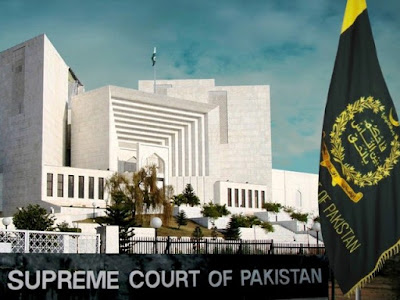
Below  are excerpts from the dissenting notes of the Supreme Court’s Panamagate case, written by Justice Asif Saeed Khosa. Justice Khosa headed the five member bench which was split 2:3 in its verdict. 1. Justice Khosa opened with a quote from  The Godfather 2. He said other institutions failed or refused to probe Nawaz 3. He said the court took up the case so a PM could not have a ‘field day’ 4. Khosa said Nawaz was not truthful 5. How were London properties acquired? 6. Dubai factory was not mentioned in PM’s first or second address 7. Factory in Makkah or Jeddah, Khosa asked 8. PM said the record was available, his lawyer said it wasn’t

Disease, not crime by Shanza Faiq

Image
MY VIEWS: This opinion article saw my attention lately while surfing DAwn news website...... this added to my curiosity that how the editor expressed her views on the matter of suicide being a crime or disease. dealing all in all relevant quarters, shattering the barrier of what is called a rationalist approach this article focuses on the depression, suicide, mental health care and initiatives taken to comprehend this issue.

From Bhutto to Zardari

Image
THE spectacle of Sharjeel Memon — a former provincial minister accused of siphoning billions of rupees — being presented a gold crown by his supporters on his return home, two years after leaving the country, was utterly disgusting. He was eulogised for what his party men described as his “services for the people”. Out on protective bail, the minister declared the corruption cases against him to be “political victimisation” and vowed to fight for justice.

Jinnah wasn't born in Wazir Mansion, so where was his actual birthplace?

Image
Pakistan’s founder Mohammad Ali Jinnah, like all major personalities in history, is a contradictory figure. Many, with different ideological backgrounds and motivations, claim him. While these claims are an outcome of political and social vicissitudes, one would expect that at least there would be consensus over Jinnah’s year, date and city of birth. But it’s not so simple.

BABYLONIAN KING'S CODE OF HAMMURABI: AN EYE FOR AN EYE

Image
THE CODE OF HAMMURABI HAMMURABI RECEIVING CODE OF LAWS FROM SUN GOD SHAMSH. INTRODUCTION The Code of Hammurabi was inscribed on a stele and placed in a public place so that all could see it, although it is thought that few were literate. The stele was later plundered by the Elamites and removed to their capital, Susa; it was rediscovered there in 1901 in Iran and is now in the Louvre Museum in Paris. The code of Hammurabi contained 282 laws, written by scribes on 12 tablets. Unlike earlier laws, it was written in Akkadian, the daily language of Babylon, and could therefore be read by any literate person in the city.

COUSIN MARRIAGE: AN ISLAMIC PROSPECT

Image
Introduction What is a Cousin Marriage? It is generally regarded as the marriage between two close blood relatives. There are various terms being used in this context. These terms are of legal importance and have implications in genetic and Inheritance issues. Cousins may be: First Cousin Second Cousin Parallel cousin (two brothers or two sister’s children) Chacha, Taya, Khala Crossed Cousin (a brother and her sister’s children) Mamoon zad, Phoophi zad Double first cousin—two persons are Double first cousins when both of their parents are first cousins. Consanguinity is the degree of closeness the common ancestor

Cousin marriage ‘triggers disorder’ by dawn.com

Image
LAHORE: The trend of marriages between cousins, within a clan or caste should be discouraged as the number of children suffering from a group of genetic diseases, called Lysosomal Storage Disorder (LSD) in medical terminology, is on the rise. Such children do not survive more than five years if not diagnosed and treated as early as possible. Treatment of LSD changes outcome from miserable death to a near normal but it is very expensive.

Pakistan’s water diplomacy by ALI TAUQEER SHEIKH

Image
FOR no other known reason but to avoid being seen as violating the Indus Waters Treaty (IWT), India sent a 10-member delegation to Pakistan from March 20 to 21, for the 113th meeting of the Permanent Indus Waters Commission. India had practically declined these mandatory annual meetings since May 2015. It is a positive development, even if the result was predictably inconclusive.

Chief of a phantom army: General Raheel Shareef by Zahid Hussain

Image
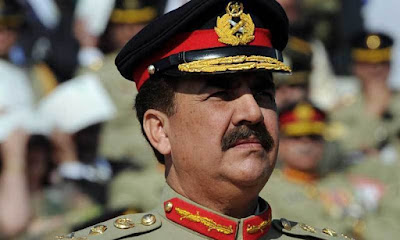
It is now official. Retired Gen Raheel Sharif will soon be taking over the command of the so-called Islamic army that is still to take shape. The ambiguity surrounding the decision to lend the services of the country’s former army chief to Saudi Arabia has finally been cleared. The  defense  minister has confirmed what has been  rumored  for the past several months.

WHO WAS YAYHA KHAN? SMOKER's CORNER by NADEEM F. PARACHA shb

Image
In August 1977, a small crew from Pakistan Television (PTV), visited a house of a former general of the Pakistan Army. The general had also been the country’s president between March 1969 and December 1971. He had been living in that house since early 1972 and was hardly ever seen in public for over five years. He had been under house arrest. Apart from this, he had also become a virtual recluse.

CPEC: Is there cause for alarm? CPEC is not another East India Company by Khuram Husain

Image
A number of articles in the past week have created some undue anxiety about the China-Pakistan Economic Corridor. Let us put it in plain English at the outset: CPEC is not another East India Company. That comparison is specious and entirely unhelpful, even if some find it useful purely as a metaphor.

THE COST OF CPEC by NASIR JAMAL

Image
It is hard to miss them: an excavator digging the road near Thokar Niaz Beg where another new concrete pillar will soon be raised. This structure is being constructed to support the almost 27-kilometres-long elevated track for the country’s first rapid transit train project, the Lahore Orange Line Metro Train. A front-loader waits nearby to be called to scoop up the rubble and load it on to the dumper to make room for the workers to fix a steel mould in the ditch for the concrete pillar.

THE DOCTRINE OF NECESSITIES: WHEN JUDICIARY HIJACKED DEMOCRACY

Image
OVERVIEW There have been many landmark cases through the decades in which court decisions have gone on to change the course of Pakistan’s history. These include the recent Panama Case, The hanging of Zulfikar Ali Bhutto in a murder case; Maulvi Tameezuddin case; and the Swiss letter case which led to the removal of  Yousaf Raza Gilani from the office of the prime minister as well as the Asghar Khan case in which the Supreme Court found that intelligence agencies were involved in election rigging in 1990s.

IMPORTANT SECTIONS WHICH ARE COMMONLY USED IN DAILY PROSECUTION

Image
These are the important section used in day to day prosecution. for those who are doing LAW they should learn, discuss and comprehend these sections.  109 – Abutment 147/148 – Punishment for rioting and armed with deadly weapon 154 – FIR 294 – Obscene acts 295A – Outraging religious beliefs 302 – Qatl-e-amd (intentional and deliberate murder) 324 – Attempt to commit Qatl-e-amd 337 – Shujjah (bodily hurts) 345 – Wrongful confinement 352 Punishment for assault 365 Kidnapping 376 Rape 379 Theft 384 Extortion 392 Robbery 452 House trespass 504 Intentional insult 505 infect of politicians 420 Cheating and dishonestly inducing delivery of property Source:  The main source of this post is Wikipedia. 

FIR section 154 Cr.P.C. Pakistan – First Information Report

Image
First information is construed as the earliest communication or intimation of crime to the state agency, to set it in motion to under take investigation. Such information irrespective of its brevity or length has to convey the relevant information pertaining to the nature and place of occurrence including description of victim of violence. The object of section 154 of Cr.P.C. is two fold; from the point of view of information its objection is to set the criminal law in motion, from point of view of investigation it’s to collect evidence for tracing and bringing the culprits to justice.

15 points for the improvement of the criminal justice system by MOHAMMAD ALI BABAKHEL

Image
WHILE disposing of a civil petition recently, the Supreme Court opted for a diagnostic approach and incorporated 15 points for the improvement of the criminal justice system. One, taking cognisance of the inconvenience often confronted by complainants regarding non-registration of FIRs, the court explicitly pronounced that under Section 154 of the CrPC, the police have no discretion to decline registration. Two, to discourage false complaints where applicable, cases under Sections 182 and 211 are to be registered. Three, many individuals are nominated as the accused in the FIR registered for a single case, particularly in the rural areas. Such tactics are employed to book as many male members from the accused side as possible. To discourage such practices the court observed that “no person should be arrested unless there is sufficient evidence available with the police to support such arrest”.

General Law Questions and Code of Criminal Procedure and Pakistan Penal Code Must Know Questions

Image
GENERAL QUESTION NO.II 1.The name of the statute relating to criminal proceedings in Pakistan is The Code of Criminal Procedure 2. Any officer above the rank of Constable can perform the duties of an SHO. 3. Bail before arrest is accompanied by an affidavit. 4. The color of the tie of a male apprentice lawyer is Maroon. 5. The color of the scarf of a female apprentice lawyer is Maroon. 6. In criminal cases the accused appears on left side of the Judge. 7. File inspection can be made by the payment of two rupees.

HOW MUCH YOU KNOW ABOUT IRAQ WAR? Chilcot Report (the Iraq Inquiry) exposes Tony Blair

Image
IMPORTANT POINTS ·           2.6 million Words in the bloated report authored by Sir John Chilcot and his committee. ·          Commissioned by the then British Prime Minister Gordon Brown in 2009, the inquiry has examined the run-up, conduct and aftermath of the 2003 Anglo-American invasion of Iraq in exhaustive detail.

ISLAMIYAT AD IB, ASI and OTHER FPSC, SPSC and NTS TEST PIVOTAL MCQ PART 3

Image
1. How many stages the Quran contains? (a) 8  (b) 7  (c) 9  (d) 12 NOTE:    For the convenience of people who wish to read the  Qur'an  in a week the text may be divided into 7 portions, each portion is known as  Manzil.  he following division to 7 equal portions is by Hamza Al-Zayyat. Al-Fatihah (chapter 1) through An-Nisa' (chapter 4) consisting of 4 surahs. Al-Ma'ida (chapter 5) through At-Tawba (chapter 9) consisting of 5 surahs. Yunus (chapter 10) through An-Nahl (chapter 16) consisting of 7 surahs. Al Isra' (chapter 17) through Al-Furqan (chapter 25) consisting of 9 surahs. Ash-Shuara' (chapter 26) through Ya-Seen (chapter 36) consisting of 11 surahs. As-Saaffat (chapter 37) through Al-Hujarat (chapter 49) consisting of 13 surahs. Qaf (chapter 50) through An-Nass (chapter 114) consisting of 65 surahs.

15 MOST PROMINENT MUSLIM WOMENS OF ALL TIME

Image
THE GREAT MUSLIM WOMEN OF ALL TIME  This post, the first of several on the topic, intends to highlight the various contributions of Muslim women throughout medieval and early modern history. While many people may be familiar with the accomplishments of contemporary Muslim women (whether heads of state, scholars or activists), the fact that women also played a pivotal role in the pre-modern Muslim world as intellectuals, poets, mystics, rulers and warriors tends to be less