Posts

Showing posts with the label pakistan affairs

From Bhutto to Zardari

Image
THE spectacle of Sharjeel Memon — a former provincial minister accused of siphoning billions of rupees — being presented a gold crown by his supporters on his return home, two years after leaving the country, was utterly disgusting. He was eulogised for what his party men described as his “services for the people”. Out on protective bail, the minister declared the corruption cases against him to be “political victimisation” and vowed to fight for justice.
Pakistan’s water diplomacy by ALI TAUQEER SHEIKH

Image
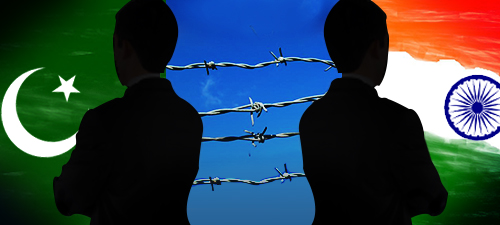
FOR no other known reason but to avoid being seen as violating the Indus Waters Treaty (IWT), India sent a 10-member delegation to Pakistan from March 20 to 21, for the 113th meeting of the Permanent Indus Waters Commission. India had practically declined these mandatory annual meetings since May 2015. It is a positive development, even if the result was predictably inconclusive.

Chief of a phantom army: General Raheel Shareef by Zahid Hussain

Image
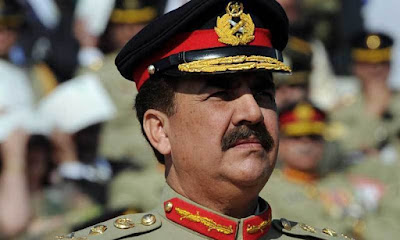
It is now official. Retired Gen Raheel Sharif will soon be taking over the command of the so-called Islamic army that is still to take shape. The ambiguity surrounding the decision to lend the services of the country’s former army chief to Saudi Arabia has finally been cleared. The  defense  minister has confirmed what has been  rumored  for the past several months.

CPEC: Is there cause for alarm? CPEC is not another East India Company by Khuram Husain

Image
A number of articles in the past week have created some undue anxiety about the China-Pakistan Economic Corridor. Let us put it in plain English at the outset: CPEC is not another East India Company. That comparison is specious and entirely unhelpful, even if some find it useful purely as a metaphor.

ISLAMIYAT AD IB, ASI and OTHER FPSC, SPSC and NTS TEST PIVOTAL MCQ PART 3

Image
1. How many stages the Quran contains? (a) 8  (b) 7  (c) 9  (d) 12 NOTE:    For the convenience of people who wish to read the  Qur'an  in a week the text may be divided into 7 portions, each portion is known as  Manzil.  he following division to 7 equal portions is by Hamza Al-Zayyat. Al-Fatihah (chapter 1) through An-Nisa' (chapter 4) consisting of 4 surahs. Al-Ma'ida (chapter 5) through At-Tawba (chapter 9) consisting of 5 surahs. Yunus (chapter 10) through An-Nahl (chapter 16) consisting of 7 surahs. Al Isra' (chapter 17) through Al-Furqan (chapter 25) consisting of 9 surahs. Ash-Shuara' (chapter 26) through Ya-Seen (chapter 36) consisting of 11 surahs. As-Saaffat (chapter 37) through Al-Hujarat (chapter 49) consisting of 13 surahs. Qaf (chapter 50) through An-Nass (chapter 114) consisting of 65 surahs.

Explain how Kalabag dam is bone of contention between the provinces? what is the actual reality behind the relics of Kalabag dam. Is Kalabag the panacea to all our Sufferings?

Image
Explain how Kalabag dam is bone of contention between the provinces? what is the actual reality behind the relics of Kalabag dam. Is Kalabag the panacea to all our Sufferings?    THE UNTOLD FACTS — I  Naseer Memon September 4, 2016. DEBUNKING THE MYTHS ABOUT THE CONTROVERSIAL KALABAGH DAM. Recently, a serving chairman of Water and Power Development Authority (Wapda), launched a campaign in favour of the Kalabagh Dam. His article ‘Kalabagh Dam — sifting facts from fiction’ was published in newspapers in many parts. Zafar Mahmood, who has now resigned as chairman Wapda, brought to the fore several facts but left several facts untold. It was unbecoming for the head of Wapda to use his official position to lend favour to a project that has been repudiated by the elected assemblies and people of three provinces. They were forced to think that, perhaps, only an official from Punjab could enjoy this liberty. This episode further tarnished the federal character...

NATIONAL FLAG PROTOCOL

Image
No other flag must fly higher. When displayed or flown alongside other national flags, the National Flag must be displayed or flown at the same height as the other national flags, never lower. When displayed alongside provincial, military or corporate flags, the National Flag must be higher. When tied to a mast, it must be tied only at the left (at the beginning of the white bar) and left to fly freely without any obstruction. Must not touch the ground, shoes or feet or anything unclean. Must never be flown in darkness.

So shall you reap : Side-effect part-I

Image
Part - I Side-effect The writer is a poet and author based in Islamabad. There may be nothing new for some informed and insightful readers today. But it is important to reiterate what we have gone through at the hands of Western imperial ambition to control the global economy on the one hand and our own intellectual and political frailties across the Muslim world on the other. Today, the combination of the two makes us, and the rest of the world, suffer from the scourge of extreme forms of terrorism in the name of Islam. Who emerged as popular leaders in the Muslim-majority countries of the world in the 1950s and 1960s – irrespective of their internal strife and inconsistencies – with many succeeding to form political governments? Some of the prominent among them were Sukarno in Indonesia, Mohammad Mossadegh in Iran, Gamal Abdel Nasser in Egypt, Ahmed Ben Bella in Algeria, Zulfikar Ali Bhutto in Pakistan, Sheikh Mujibur Rahman in Bangladesh and Muammar Al-Gaddafi in Lib...

IQBALISM: HOw he saw the KHUDI and THE NEW MUSLIM MAN

Image
IQBALISM The Khilafat Movement was started by Ulema groups and pan-Islamists after the defeat of Turkey’s Ottoman regime in the First World War. From this tension emerged a man who would become the second major figure in the evolution of Muslim nationalism in India after Sir Syed Ahmad Khan, and, consequently, that of Pakistani nationalism. In fact, he believed that the fall of the Ottoman caliphate in Turkey could be catalytic to the emergence of a renaissance in Islam. He also applauded the takeover of Turkey by Mustafa Kamal — a secular nationalist who abolished the caliphate and declared Turkey to be a modern republic.

48 Consolidated Set of Most repeated MCQ's of Pakistan Affairs : NTS,FPSC,SPSC,GK most frequent asked Questions.

Image
Set 1: • Liaquat Ali khan was assassinated in Rawalpindi on 16th October, 1951. Was buried in Karachi near Quaid. • Liaquat ali Khan born in Kernal (East Punjab) on 1st Oct: 1895. • Who replaced Liaquat Ali Khan as Prime Minister? Khawajah Nazimuddin • Who replaced Nazimuddin as Governor General? Ghulam Muhammad • Jamilla was the first Muslim girl who hoisted Muslim League flag onteh Punjab Secreterat, Lahore (1946) • Rawalpindi became the temporary capital of Pak: in 1960. • First commissioner of Sindh Charles Napier. • Sindh assembly proclaimed Sindhi as official language of Sindh in 1972. • Baluchistan got status of province on 1st July, 1970. • Pak: bought Gawader (1958) & Jiwani from Oman. • Pak: came into being on 27 Ramzan, 1366 A.H Thursday. • Pak: standard time was adopted on Oct:1, 1951. • Population Census-1951, 61,72,81,98. • The only vice-president of Pak: Noorul Amin.

Inside Story - Kashmir conflict: security or political problem? Two centuries of oppression in Kashmir

Image
The furious protests that erupted in Indian-administered Kashmir on July 8 are a poignant reminder that popular sentiment cannot be ignored merely because it does not fit in with the nationalist narrative of an unrepresentative government. That is especially true where popular sentiment is grounded in the cause of a unique identity. In the absence of legitimate political forums, such sentiment foments unrest which builds until circumstances provide a martyr such as Burhan Wani, the young rebel whose killing by Indian security forces has ignited the protests in Kashmir.

WATER ECONOMY

Image
  Syed Muhammad Abubakar July 3, 2016 Leave a comment Water is a source of life for multiple sectors, especially agriculture, industry, energy, and transport. Investments in the water sector are needed to ensure water security, protecting the society from water-related risks, as well as supporting economic growth and social well-being. But economic growth has its own pros and cons. On one hand, it can induce water scarcity, but on the other it can provide the resources needed to ensure water availability and address various water-related risks.

Electricity: backbone of economy

Image
By Farrukh Saleem July 03, 2016 Capital suggestion Solar power in Pakistan. On December 17, 2015, the National Electric Power Regulatory Authority (Nepra) approved upfront (advance) tariff for Solar PV (photovoltaic) Power Plants at Rs14.76 per kWh (years 1-10, North Region). Solar power in Dubai. On June 27, 2016, the Dubai Electricity and Water Authority (DEWA) selected bidder for the 800 MW third phase of a solar park that will be constructed based on the independent power producer model. The selected bidder, a Masdar-led consortium including Spanish companies, had submitted a world-record-low of 2.99 US cents per kWh. Solar power in Pakistan at Rs14.76 per kWh and solar power in Dubai at 2.99 US cents per kWh. Why?

why Pakistan has historically been unable to build constructive ties with its neighbours?

Image
                    why Pakistan has historically been unable to build constructive ties with its neighbours with the sole exception of China Just a month before the China-US summit in 2002, the Chinese presidential plane was found bugged and an investigation highlighted that spying gadgets were planted by US officials during the refurbishment of the plane in Texas. The world anticipated that this controversy would lead to the cancelling of the summit or, at least, would overshadow the talks — skewing the space for bilateral discussion on other important matters.

Budget 2016 -17. The Key Points by Sir Nofil Safwan

Image
Budget 2016 -17. The Key Points • budget with a total outlay of Rs 4.39 trillion for the fiscal year 2016-17 • growth target at 5.7pc in the next FY 2016-17. • Budget deficit with a Rs 1.2 trillion, or 3.8pc of the GDP (4.3% in previous year) i.e. gap in income and expenditure, so the • fiscal deficit at 3.8pc of the GDP FY 2016-17, • tax-to-GDP ratio target to over 10pc for FY 2016-17 (7% previous year • Rs700bn allocated for agricultural loans FY 2016-17 • The defence budget has been increased 10pc for FY16-17 to Rs860.2bn from Rs781bn last fiscal year.

Writing the history of Sindh by mubarak ALI

Image
There are two important elements for writing the history of any land: the availability of basic sources, and the presence of professional and trained historians. The modern historiography of Sindh was introduced during the British rule when the Historical Society of Sindh was founded with the purpose of reconstructing the history of Sindh. The Society held regular meetings where the members presented research papers on different aspects of history, as well as published a historical journal which contained well-researched papers, thus contributing immensely to recording the history of Sindh. Sadly, the Society and the journal discontinued after Partition. However, in its early period, the Sindhi Adabi Board published some material originally available in Persian, after careful editing of the manuscripts. In this respect the Board’s efforts are commendable. The Board had planned to publish the history of Sindh in nine volumes. However, the goal could not be accomplished and only ...

Understanding Aurangzeb by Dr Mubarak ALI

Image
Being a repository of past events, history preserves the record of those individuals who played an important role in shaping the history of their time and are resurrected and used from time to time by politicians to accomplish their interests. In the subcontinent, Akbar and Aurangzeb contributed significantly in creating social and political orders, although both were antithetical to each other. Akbar was a believer of Sulh-i-kul (peace with all), tolerant to followers of all religions. He made attempts to cut off cultural relations with Central Asia and Indianise the Mughal court by adopting Indian customs, traditions and festivals. On the other hand, Aurangzeb tried to subvert this policy and Islamise the Mughal State by introducing Islamic provisions. The role of these two emperors was analysed critically during the colonial period and in the process of the freedom struggle. When in the 1920s Indian history was communalised, Aurangzeb was considered as an orthodox Muslim r...

Dara’s makeover by Dr Mubarak ALI

Image
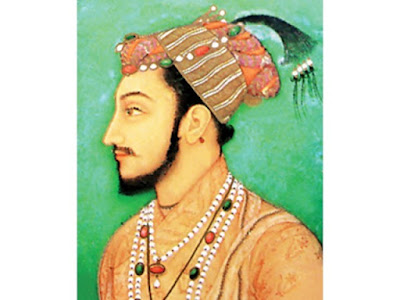
Generally, history remembers the victor and forgets the vanquished. However, in some cases to project the image of the winner, his qualities are highlighted while his opponents are downgraded for being inexperienced, incapable and incompetent. In other cases, the loser is projected as energetic and talented but nevertheless unable to defeat his opponent who might have triumphed solely through his determination. In the third case, the loser is completely ignored or treated ignominiously and fails to achieve a place in history. Contemporary historians present Aurangzeb as a brave, dashing and shrewd politician and diplomat. One who could foresee the advent of the civil war and therefore made sure that he was prepared for it by maintaining good relations with influential Mughal nobles and winning over his younger brother Murad, who was a valiant and dauntless warrior. On the other hand, Dara Shikoh does not get favourably treated in the chronicles of history as he lost the battl...

DEAD LANGUAGE by Dr Mubarak ALI

Image
Language is a repository of social and cultural values and traditions. It reflects ideas, concepts, sensibilities and the mindset of a society. Literature in a certain language indicates its richness and dynamism. If a language fails to produce any original literature and there is no addition of new vocabulary and terminology, it shows how stagnant the society is. It is the responsibility of intellectuals to enrich a language with new ideas and create linguistic consciousness in a nation. Linguistic nationalism plays an important role in uniting scattered cultural groups and shaping them into a nation. After the French Revolution of 1789, the revolutionary government made French the national language and forcibly wiped out other languages in order to unify all linguistic groups. Another example is of Germany which was divided into many small principalities and petty states until its intellectuals and thinkers made efforts to create a national consciousness by enriching the Ge...

Why Should we remember 1857? by Dr Mubarak ALI

Image
The year 1857 is an important year in the history of Freedom Struggle against the British rule. Nations write and rewrite their history in order to create historical consciousness among people. The task of historians becomes difficult when the past is distorted and fractured as a result of some dominant political/historical interpretation. In this case, they have to retrieve the lost-past and reconstruct it on the basis of fresh evidence. In 1957, after hundred years of the Great Rebellion, the Indian government not only published number of books on 1857 but organised conferences and seminars to highlight the significance of the uprising.  The great Analysis on 1857 Mutiny :  The two eminent historians differed on the interpretation. Prof. Mujamdar called it ‘sepoy Mutiny’, while Prof. Sen titled his book simply as ‘1857’. With passage of time number of new documents and sources have been published which brought to light new facts about the event which greatl...